JEDI HoloNet

470.30 // Xappyh Sector Falls; Third Estate Consolidates Control, Eyes Further Expansion

A scene of a bombardment of a civilian location on the planet Tiss’sharl.

   By Andee Nevaro Affiliated Press

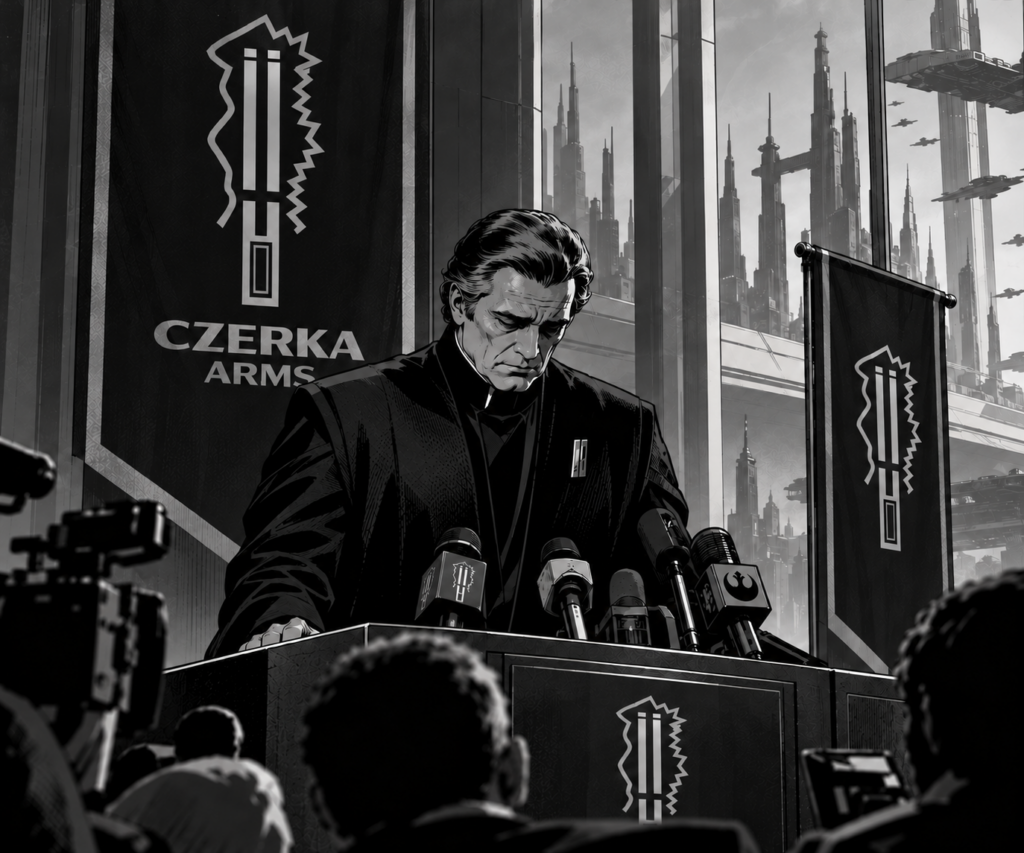
CORUSCANT — The Xappyh Sector Council has officially dissolved following weeks of relentless bombardment by Third Estate forces. Leaders on the key worlds of Tiss’Shar and Ruuria have capitulated, agreeing to submit to unconditional authority under Third Estate Governors and provisional governments installed by the occupying military. While EckCzar Vahn Goreing has claimed absolute victory and insisted all dissent has been quashed, independent reports contradict this narrative. On the planet Stic, whose turbulent, mountainous geography favors guerrilla tactics, a significant pocket of armed resistance remains active. partisan activity on Stic is reportedly aimed at maximizing the logistical and human cost of the Third Estate’s occupation… [Read More]

Triellus League Seizes Outer Hutt Sectors; 300M Bounty Escalates Syndicate Civil War

   By Ayahes Cesaro Affiliated Press

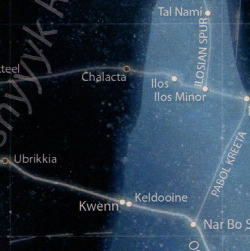
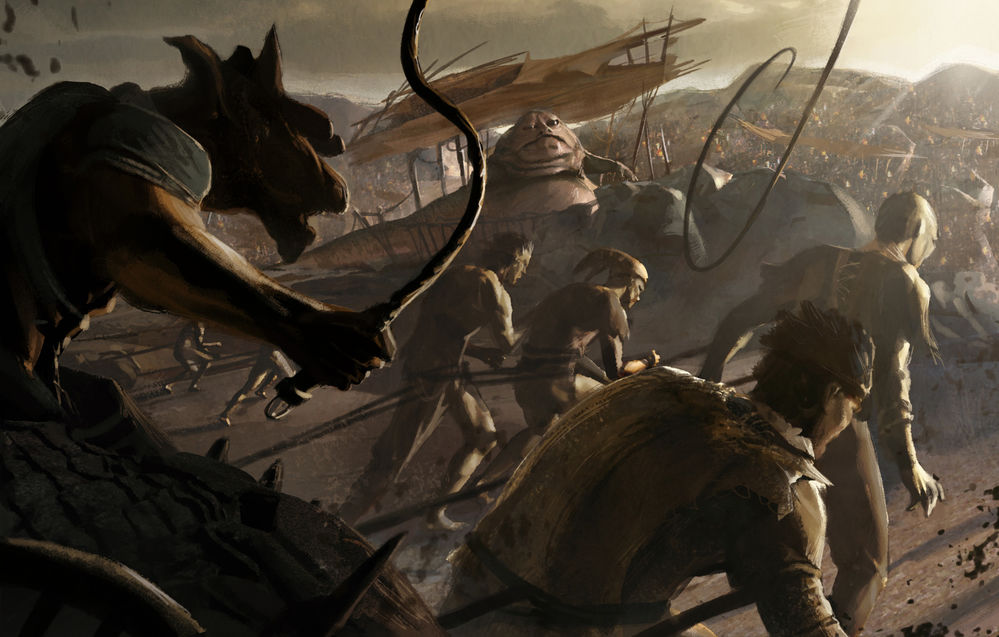
NAL HUTTA — The precarious balance of power within Hutt Space has shattered. The Triellus League—a powerful syndicate of upstart Hutt cartels that amassed immense wealth through arms trafficking during the Wyld War—has seized control of key sectors surrounding core Hutt territory, triggering an unprecedented syndicate civil war. Although unrecognized by any major galactic government, the League’s rapid territorial grab poses a direct existential threat to the traditionalist power structure long dominated by legacy families, including Rotta of the Desilijic Clan and Cazlo the Hutt… [Read More]

Instrop Sector Votes to Join League of Sovereign Systems Amid Rising Hutt Threat

   By Quan Regal Affiliated Press

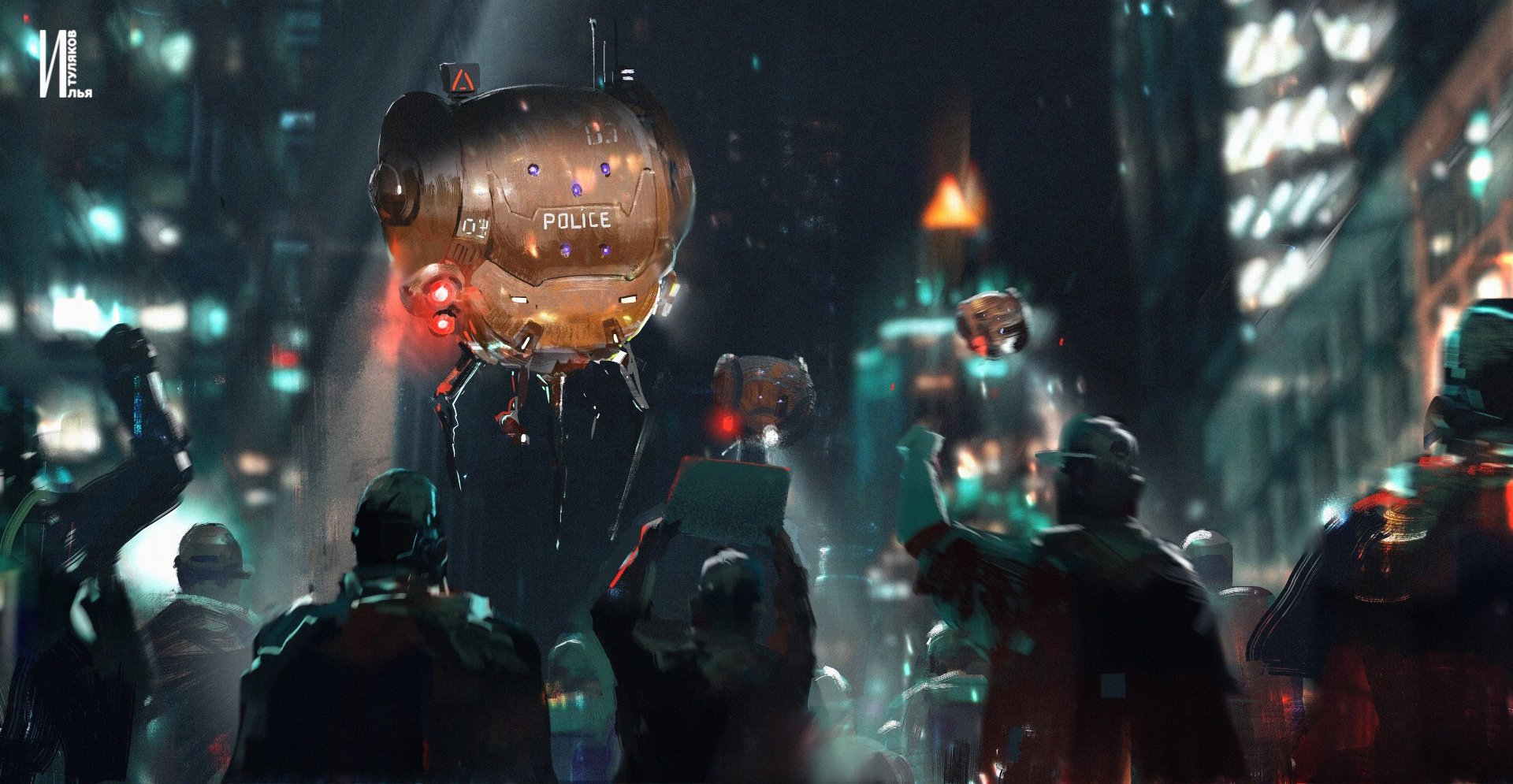
SVIVREN — Fearing the fallout from escalating cartel warfare along its borders, the traditionally independent Instrop Sector has voted by a decisive three-fourths supermajority to petition for formal admission into the League of Sovereign Systems (LSS). The referendum, which includes major regional systems such as Rannon and the trade hub at Velmoth Port, marks one of the most significant territorial realignments in the region since the end of the Wyld Conflict, as smaller Outer Rim sectors increasingly abandon strict neutrality in search of collective security… [Read More]

470.29 // Affiliated Press Special Report: The Autopsy of a One-Term Chancellery

By Quan Regal

CORUSCANT — To understand the staggering fall of Kalik Carr, one must first measure the height of her ascent. Two election cycles ago, a unified front of Free Soilers, Centrists, and Diplomats delivered a mandate so powerful that a single-term defeat would have been dismissed as a political impossibility. Carr entered office with the mandate for radical change, promising to dissolve centuries of entrenched Coruscant power in favor of sector autonomy.

Her strategy was sound on paper, capitalizing on a deep anti-federal current. Her defeat was not due to the strategy itself, but to its fatal, irreversible collision with reality. This is the autopsy of how a populist movement’s defining vision became its political undoing.

Foreign Affairs Failures

Chancellor Carr’s absolute commitment to non-intervention in the Outer Rim was the first pillar of her platform to buckle. Her calculation was that direct military aid to independent sectors would escalate tension with the expanding Third Estate—a gamble that initially held the support of her governing majority. The War Hawks were isolated, their warnings of a “militant cancer” seen as typical establishment fear-mongering.

The miscalculation was not political, but visual and moral.

The collapse of the Xappyh Sector was a turning point. AP reports detailing the targeted bombardment of civilian centers on highly populated worlds stripped the non-interventionist argument of its logical veneer. Non-intervention in theory was a principle of autonomy; in practice, it was seen as moral negligence. Sentiment shifted not gradually, but in an instant. The coalition fractured as the wings of the Centrist and Diplomat parties recoiled, leaving the Free Soilers holding a moral liability they could not divest. This shift in public conscience created the political oxygen for the rise of Ryn Malvero and his United Republic platform, which capitalized on the need for a principled use of federal power.

Domestic Failures

While the Xappyh crisis weakened the Chancellery, the attack in the Duneeden System was the mortal blow. It directly targeted the core of the Republic—a single jump away from Coruscant—exposing a terrifying vulnerability. The image of hostile warships successfully navigating the inner depths of hyperspace lanes fundamentally broke the public’s perception of safety.

This crisis was the ultimate failure of Carr’s defining vision of military decentralization. For voters, simple, absolute security, especially near the capital, was non-negotiable. The Free Soiler argument—that the Republic Navy needs to be decentralized and that the attack proved it—was an absolute disaster.

In a stunning backfire, this rebuttal did not win the argument; it branded the Free Soilers as unpatriotic and ideologically rigid. The implication that they would prioritize a political restructure over an immediate federal defense response during a moment of existential dread doomed the administration. It was seen as an abandonment of the primary federal duty of protection. More Diplomat senators, recognizing the strategic toxicity, formally allied with other parties in unified opposition, sealing Carr’s fate.

The autopsy reveals a clear verdict: Chancellor Carr did not just lose an election; her entire strategic foundation collapsed. Her platform of radical decentralization was her greatest asset when the public wanted Coruscant out of their lives, but it became her greatest liability when they needed Coruscant to save them. Carr could not shift from a populist disrupter to a wartime protector. The final cost of her administration’s rigid adherence to its core principles was the dissolution of its political life.

Conclusion:

The autopsy reveals a clear verdict: Chancellor Carr did not just lose an election; her entire strategic foundation collapsed. Her platform of radical decentralization was her greatest asset when the public wanted Coruscant out of their lives, but it became her greatest liability when they needed Coruscant to save them. Carr could not shift from a populist disrupter to a wartime protector. The final cost of her administration’s rigid adherence to its core principles was the dissolution of its political life.

470.20 // ALZOC III DAILY – Local Accountant Assaulted by Unknown Cloaked Individual

Alzoc City, 470.01 ABY

Residents of Alzoc City’s Financial District awoke on the 1st day of the year 470 ABY to reports of a violent break in at the private residence of local accountant Merrik Voss, a long standing employee of Orinth Logistics.

According to local authorities, Mr. Voss was discovered unconscious inside his apartment after an unidentified cloaked individual allegedly forced entry into the residence.

Several financial records are believed to be missing.

Authorities have not confirmed whether the incident was politically motivated or connected to recent commercial investigations.

Neighbours reported seeing “a robed figure” entering the apartment shortly before the assault.

“I couldn’t see their face,” one witness stated. “But they moved with incredible speed. I’ve never seen anything like it. I told them to leave as they wanted to sell me … deathsticks? And then for the sake of their sick mother? Disgusting what this galaxy has become.”

Medical personnel confirmed that Mr. Voss sustained a concussion but is expected to recover.

The Alzoc City Security Bureau has opened an investigation and is appealing for witnesses.

At this time, no suspects have been identified.

470.18 // Duneeden joins the Republic!

The Assembly of Duneeden formally announced today that the world of Duneeden will once again join the Galactic Republic, marking a historic reversal after much unrest and uncertainty. The declaration follows the recent crisis that saw three obsidian starcruisers threaten the planet, widespread infrastructure failures, and growing concern over Duneeden’s ability to stand alone against external threats.

Speaking before a packed assembly hall, the wardens described the decision as one made “not out of surrender, but out of duty to safeguard the generations yet to come.” While some citizens remain wary and harbor resentment toward the Jedi after believing their presence drew the invading force to Duneeden—the Assembly maintained that renewed partnership with the Republic offers the planet its strongest path toward security, reconstruction, and lasting peace.

Notably, the Assembly met with the Jedi in Ro’dyn. The delegation comprised of three Jedi from the Duneeden Temple: Jedi Knight Kaddigan Thorne, Padawan Learner Vriddhym Samadhi, and Padawan Learner Lev’kahn Ivor. When Warden Mok Drask of Ro’dyn was asked about the Jedi’s involvement, he stated that, “Without the Jedi’s assistance, Duneeden would not be a part of the Republic.”

470.17 // Mandalore The Rebuilder Has Died

Many Mandalorians mustered to mourn, standing in solidarity during the service of the late Asdral Gev.


Asdral Gev, commonly known as Mandalore the Rebuilder, has passed away at his home on Mandalore at the age of one hundred and forty four galactic standard years. Presiding over the Mandalorians for the past century, he was renowned for his highly decorated military career earned during the Attrition Wars, as well as his efforts in changing the trajectory of the Mandalorians after their defeat.

In 353 ABY, Asdral Gev became Mand’alor after besting Zarus Jendri, the former Mand’alor in a one-on-one duel for leadership. Asdral claimed that Zarus displayed incompetency and his isolationist stance was of detriment to the Mandalorians, given they were still in a poor place, despite having ample time to recover from their defeat after the Attrition Wars. There certainly was a need for action during such a dark time, one that Asdral swore he would make it right.

And make it right, he did. Under his administration, Asdral  ushered his people into a new era of prosperity and peace, driving profit to their system and making advancements in their agriculture. Not only that, he has sought to forge a bond with the neighbouring Galactic Republic, despite their historical conflicts and differences.

Yevad Beviin, chieftain of Clan Beviin, provided a comment. “We Mandalorians will forever commemorate and remember Asdral Gev, not only as the warrior that he was…. but the leader that our people needed. We shall forever remember him leading us into an era of stability and security. The Mando’ade will keep his memory alive but make no mistake… we shall continue to persevere, as we have done so in the past, present… and in the future.” 

However, despite the level of respect most have displayed for Asdral today, sources indicate that Mandalore the Rebuilder had lost some favour with his people in recent years, despite living up to his name. Some have labelled him a hypocrite, given his dormancy during differing conflicts, despite originally ascending to leadership due to opposition to Zarus’ isolationism and inaction.

It is also said that Asdral had surrendered Concord Dawn, a key world in Mandalorian Space as well as his clan’s ancestral home, to Republic control in a recent controversial move that shocked the Mandalorian community galaxy wide. This was allegedly arranged in a bid to keep the peace after several Mandalorian clans that lived upon Concord Dawn were said to be conspiring to conduct incursions, espionage and sabotage against the Republic.

In the ashes of his wake, one burning question still remains: What remains for the future of the Mandalorians? Will we see them uphold Asdral’s legacy… or will they become undone once more?